The Evolution of Trust
A playable explainer on why we trust each other, with game theory.
- Rabbit hole
- Alive · checked 15 days ago
36 sites · every link checked daily
The trick of the best fun educational websites is that nobody tells you they are educational. You start poking, you get curious, and ten minutes later you understand something you had been avoiding for years.
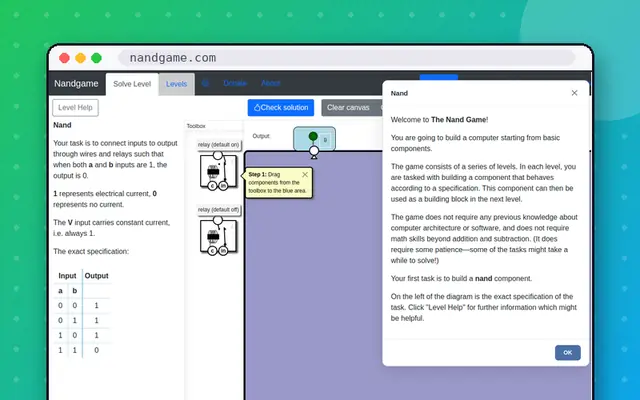
The Evolution of Trust uses simple games to show how cooperation emerges, and then collapses. The Deep Sea teaches ocean zones by making you scroll down through them. Size of Life lets you scroll from an amoeba to a blue whale. The True Size Of ... fixes your intuition about map projections by letting you drag countries around. NandGame builds a computer from a single logic gate, one puzzle at a time.
These sites share one habit: they put a question in front of you and let you answer it with your hands. That is a different feeling from reading the answer. Some are quick, like Antipodes Map. Others, like Bartosz Ciechanowski's Interactive Explainers, are long, rewarding reads.
You will find a few coding games here, Flexbox Froggy and Grid Garden, and a few that are more thoughtful, like Adventures With Anxiety!, which is a personal take rather than a lesson, so we flag it as such.
Use "Surprise me from this list" to pick a topic at random. Every link is checked daily, so you won't spend your curiosity on a dead page.
A playable explainer on why we trust each other, with game theory.
Scroll down through the ocean and meet what lives at every depth.
Ride a virtual elevator through the atmosphere and into space.
Drag countries around the map to see their real size.
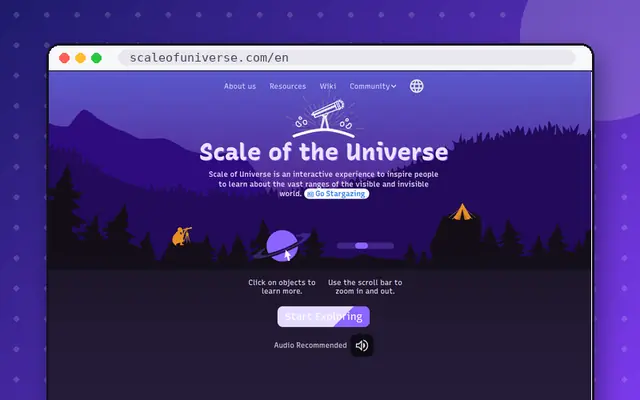
Zoom from quarks to the edge of the observable universe.
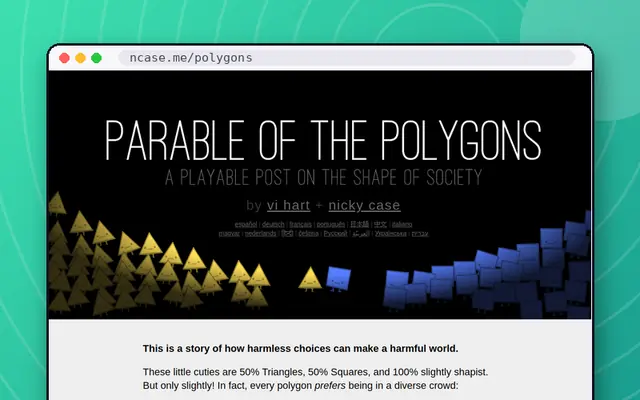
A playable post on how small biases build segregated societies.
A playable guide to how ideas and behaviour spread through crowds.
Design an asteroid and fire it at any spot on Earth.
Type a year and see which historical figures overlapped.
A guided tour of the tricks websites use to manipulate you.
Dig a hole and see where you would come out the other side.
Interactive explanations of ideas like Markov chains and eigenvectors.
Long, gorgeous interactive essays on how things work.
Help frogs reach their lily pads using CSS.
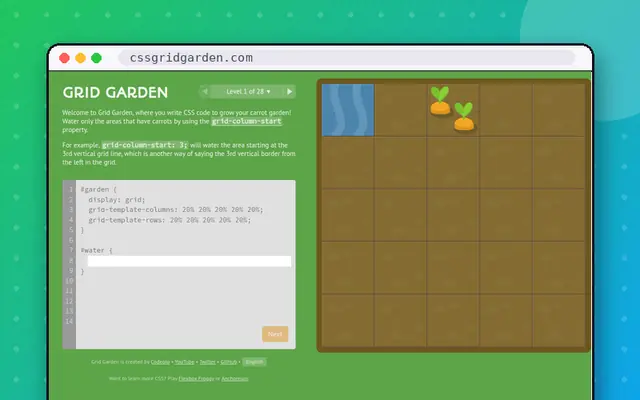
Water your carrots with CSS grid code.
Learn Vim keystrokes by playing an adventure game.
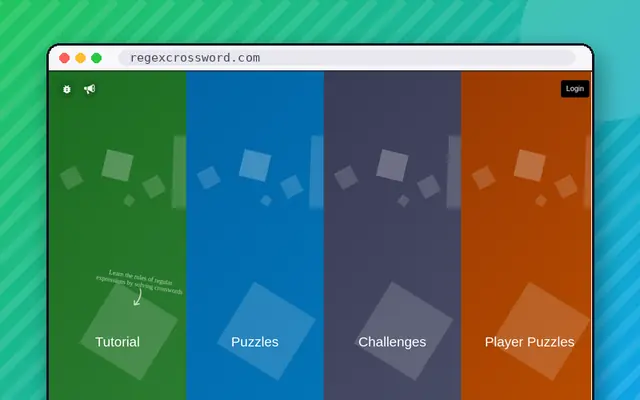
Crosswords where the clues are regular expressions.
Train a neural network in your browser and watch it learn.
Train an AI to recognise your face, sounds or poses.
Judge self-driving car dilemmas and compare with the world.
The periodic table, made interactive and genuinely nice to use.
Free physics, chemistry and math simulations you can poke at.
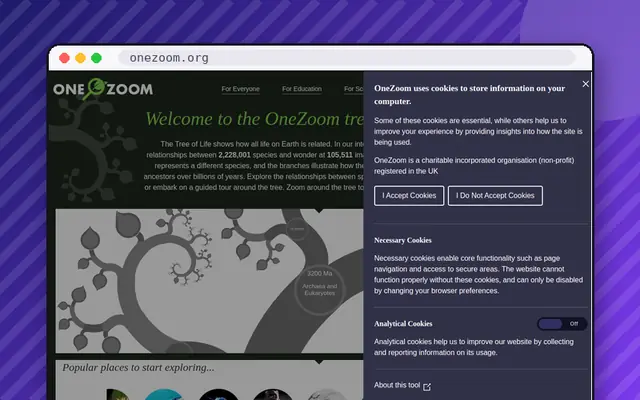
Zoom through the entire tree of life, from bacteria to blue whales.
Michael Bach's classic collection of optical illusions.
Long-form true stories that are obscure, odd and gripping.
An idler's miscellany of odd facts, puzzles and curiosities.
Type some numbers and find the sequence they belong to.
Learn how music works by making it in your browser.
Charts on how the world is changing, with the data behind them.
Animated bubble charts that bust myths about the world.
Visual essays that explain culture with data.
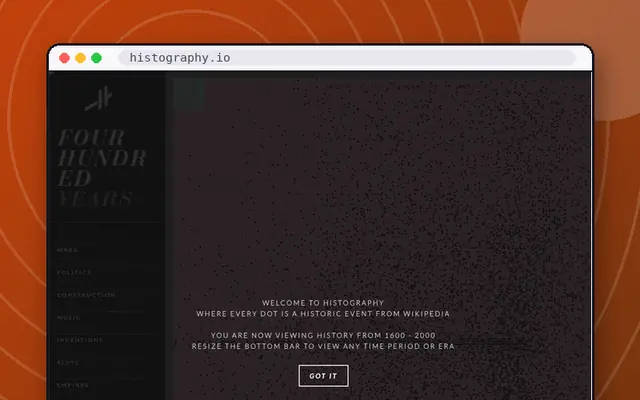
An interactive timeline of all of history, powered by Wikipedia.
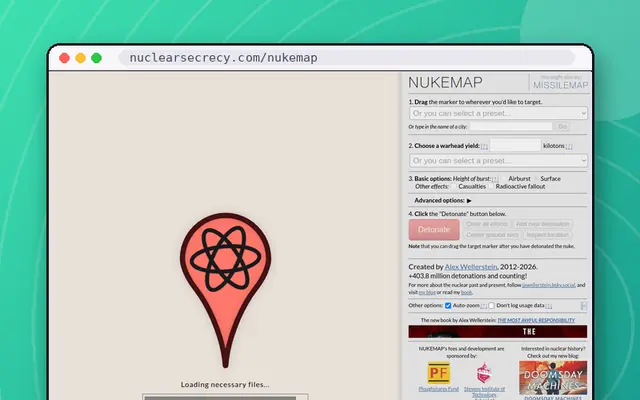
Drop a nuclear weapon on a map and see the effects.
How we picked. We looked for sites where the interaction is the teaching: you adjust, drag, draw or code, and the idea reveals itself. We left out course platforms, paywalled lessons and anything that wants an email address before showing you the good part. We also left out sites that are mostly text with a quiz at the end.
Pick by topic.
Using these with kids or in class. Many work well, but we haven't tested them against any curriculum, and some deal with serious topics (see NUKEMAP). Preview first.
More. The full Oddly Educational category has the longer list, and Websites Like Neal.fun has the lighter end. For pure curiosity, try Interesting Websites You Never Knew Existed or the button.
The Evolution of Trust, NandGame, PhET, OneZoom, Explained Visually and Bartosz Ciechanowski's explainers all teach real ideas through interaction. They are free, run in a browser and respect your time. All of them are on this list, near the top, and every link is checked daily.
Many are, including PhET, Flexbox Froggy and Size of Life, but we haven't reviewed them against any curriculum. Some cover serious topics, such as NUKEMAP and Adventures With Anxiety!, so preview before sharing. Treat the list as inspiration rather than a lesson plan.
It is a site where play is how you learn. Flexbox Froggy teaches CSS by moving frogs, VIM Adventures teaches Vim commands through a quest, and NandGame teaches how computers work through puzzles. The games are free and run without installation.
No. The sites listed here work without an account for their main content. A few, like Our World in Data, let you download data, and some ask for donations. We note anything that asks for a signup or has paid extras on the profile page.