David Rumsey Historical Map Collection
Tens of thousands of beautifully scanned old maps.
- Rabbit hole
- Works on phones
- Alive · checked 17 days ago
21 sites · every link checked daily
History is easier to love when you can poke it. The history websites in this category are archives, timelines and time machines built for curious people rather than students cramming for an exam.
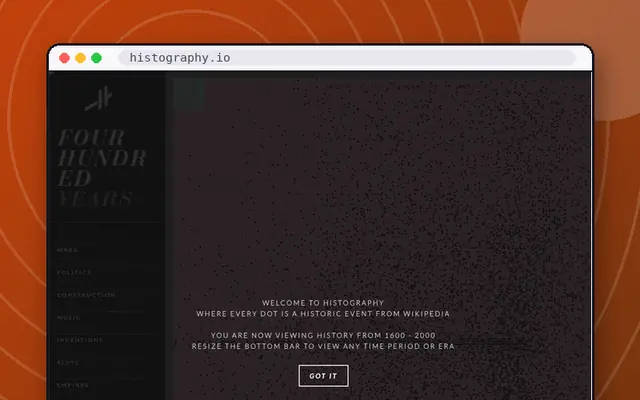
Histography is a dot-filled timeline where every dot is an event from Wikipedia, stretching from the Big Bang to today; scrub through it and click to read. Who Was Alive? lets you type a year and see which historical figures overlapped, which is a quick way to discover that two famous people were practically neighbors. David Rumsey Historical Map Collection offers tens of thousands of scanned old maps you can overlay with modern ones.
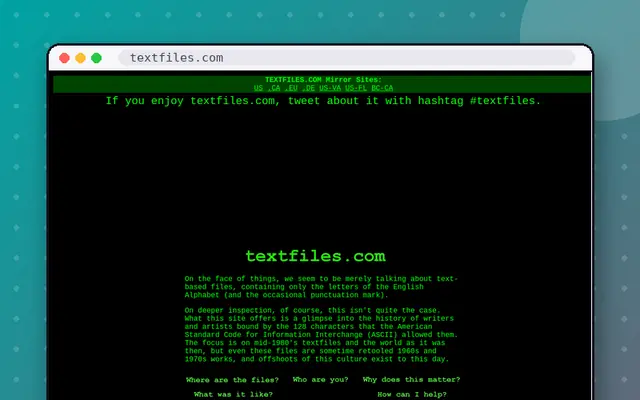
The web has a history of its own, and it is well covered. The Wayback Machine stores billions of snapshots, so you can look up a site from your childhood and see what remains. oldweb.today goes further, displaying archived pages inside emulated period browsers. Then there are the odd corners: Priyom.org documents number stations on shortwave radio, and TEXTFILES.COM preserves text files from the dial-up bulletin board era.
If you prefer your history in readable chunks, Damn Interesting and Futility Closet specialize in strange true stories and forgotten curiosities.
Keep exploring with the interesting websites list, the Nostalgia & Retro category, or Internet Rabbit Holes. To jump to a random decade, there is always the button.
Tens of thousands of beautifully scanned old maps.
Type a URL and travel to how it looked years ago.
An interactive timeline of all of history, powered by Wikipedia.
Type a year and see which historical figures overlapped.
A hub for tracking mysterious number stations on shortwave radio.
Browse archived pages inside emulated period browsers.
A million pixels sold at a dollar each, preserved in all its glory.
An idler's miscellany of odd facts, puzzles and curiosities.
The encyclopedia of internet memes and their origins.
A huge preservation project saving Flash games and animations.
Chart how often any word appears in millions of books.
A museum of about 60 internet milestones, from 1977 to 2007.
A musical time machine: pick a country and a decade, then listen.
Long-form true stories that are obscure, odd and gripping.
Strange and wonderful out-of-copyright art, books and ephemera.
Museums, art and cultural treasures you can zoom into.
A guide to uniquely odd tourist attractions across America.
Jason Scott's archive of text files from the BBS era.
Histography, Who Was Alive?, the David Rumsey Historical Map Collection and The Public Domain Review are good places to start. For the history of the web itself, try the Wayback Machine and Internet Artifacts. All are free to explore and checked daily by us.
Use the Wayback Machine from the Internet Archive: type a URL and browse its stored snapshots. For a more authentic look, oldweb.today displays archived pages inside emulated browsers such as early Netscape and Internet Explorer. Both are listed in this directory.
Yes. The David Rumsey Historical Map Collection is a large online library of scanned maps that you can search by place or era and compare with modern maps. It is a favorite among map lovers and a good starting point for the history of cartography.
Histography draws its events from Wikipedia, so it is as accurate as the underlying articles. It works best as a way to browse and see how events cluster in time. For anything important, follow the links through to the source and check them yourself.