The Library of Babel
A website that contains every possible page of text.
- Rabbit hole
- Works on phones
- Alive · checked 15 days ago
58 sites · every link checked daily
Every era of the internet leaves behind its own folklore: the memes, the webcomics, the pranks that spread by email, the one-joke sites that everyone seemed to know. The internet culture websites in this category are where that folklore lives.
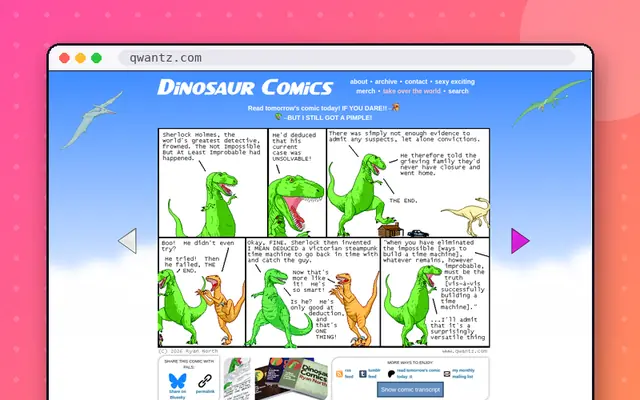
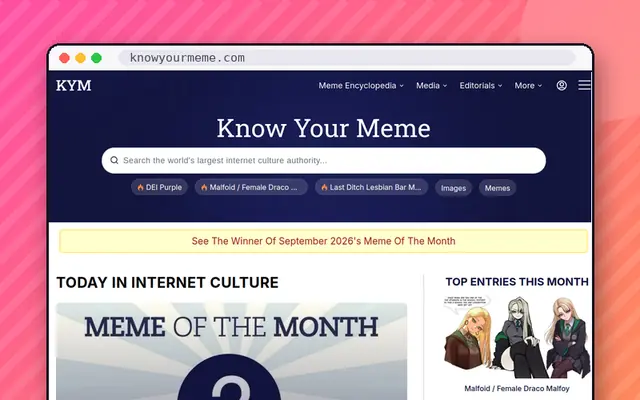
Some are archives. Know Your Meme traces how a meme started and mutated, which is handy when a joke makes no sense to you. The Million Dollar Homepage is a grid of tiny ads sold in 2005, still online, and a monument to a good idea and to link rot. Some are living art forms: xkcd has been running since 2005, and Dinosaur Comics reuses the same clip-art panels while the dialogue changes. And some are communal absurdities, like Your World of Text, an endless text canvas shared with strangers.
A word on the tone. Internet culture is funny, but it is not always polite. Know Your Meme and the SCP wiki are user-generated and can contain crude or disturbing material, and we put content notes on those profiles.
The overlap with other categories is large. Much of what lands here is also Useless or Nostalgia & Retro, and the funny websites list pulls the best jokes together. If you want the deepest dive, Internet Rabbit Holes will cost you an afternoon. Or press the button and see what the internet decided to remember.
A website that contains every possible page of text.
A shared Street View road trip steered by everyone online at once.
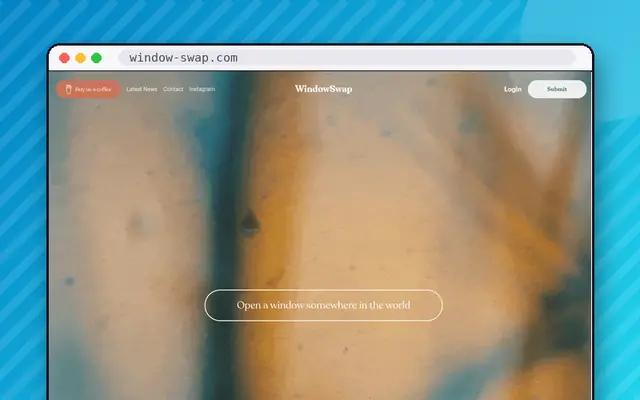
Look out of a stranger's window, anywhere in the world.
Wiggle your cursor and a stranger in a photo points right at it.
A tour of odd news, inventions and strange history.
A tiny studio on a sailboat making open-source tools and games.
A comic that reuses the same six panels and still updates.
The encyclopedia of internet memes and their origins.
A million pixels sold at a dollar each, preserved in all its glory.
Wikipedia's own list of its strangest entries.
Invented words for feelings you didn't know had names.
Satirical reviews of strange book titles and covers.
An independent search engine that favours non-commercial sites.
A catalogue of deliberately bizarre programming languages.
The archive of Google's changing logos, with interactive games.
Browse the hand-made personal sites of the modern indie web.
Randall Munroe's webcomic of romance, sarcasm, math and language.
AI invents a word, a definition and an example sentence.
An idle game about making paperclips that goes somewhere dark.
The trolley problem, escalated until it stops making sense.
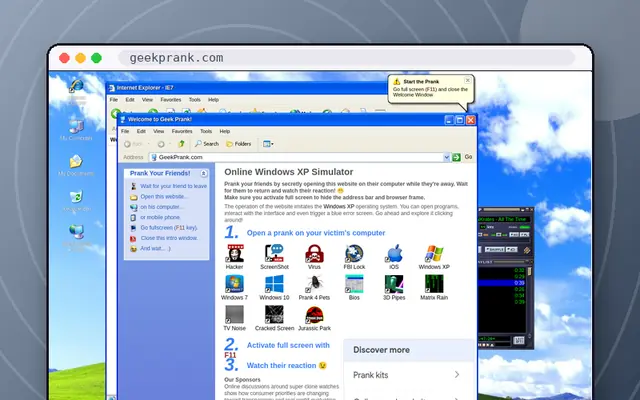
Fake Windows updates and other full-screen pranks.
An interactive story about living with anxiety.
A collaborative horror-fiction wiki about secure, contain, protect.
An infinite shared text canvas anyone can write on.
Absurd hypothetical questions, answered with real science.
A web collage built from archived GeoCities pages, 1994-2009.
A review site for Earth itself, to help improve the simulation.
An idler's miscellany of odd facts, puzzles and curiosities.
Mash the keyboard and look like you are hacking the Pentagon.
A museum of about 60 internet milestones, from 1977 to 2007.
A guided tour of the tricks websites use to manipulate you.
A huge preservation project saving Flash games and animations.
Neal Agarwal's playground of games, visualizations and weird stuff.
A password machine that is brutally honest about your choices.
A search engine for the classic web, with a surprise button.
A scatter map of thousands of music genres, with samples.
Funny buildings, strange costumes and other oddities caught by Google.
Long-form true stories that are obscure, odd and gripping.
Real-time counts of emails sent, tweets posted and sites online.
Commercial-free, listener-supported internet radio with real character.
The original 1996 Space Jam site, preserved exactly as it was.
Race from one Wikipedia page to another using only links.
Try to sketch famous logos, then reveal how wrong you were.
The cartoon website that defined early web animation.
Live radio from DJs and musicians across a huge range of genres.
Visual essays that explain culture with data.
A guide to uniquely odd tourist attractions across America.
A years-long, alphabetical blog judging the world's sandwiches.
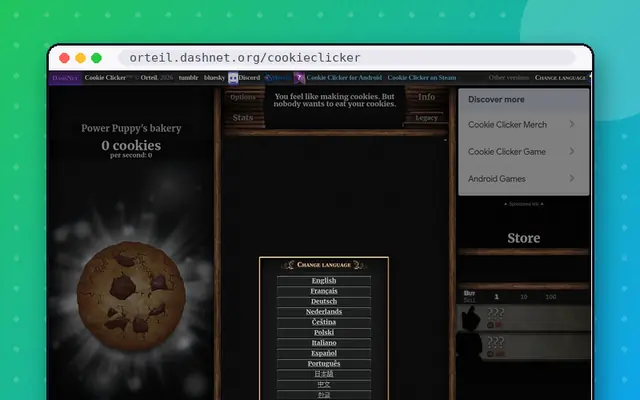
A clicker game about making an ASCII doge unreasonably long.
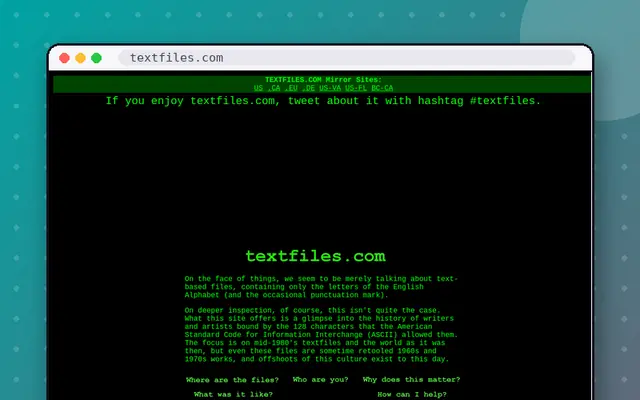
Jason Scott's archive of text files from the BBS era.
A site that preserves, creates or comments on online culture: meme databases, long-running webcomics, in-jokes, collaborative absurdities and archives of the early web. If it would make a good answer to the question of what the internet was like, it likely belongs here.
Most are, but not all. Sites such as Know Your Meme and the SCP Foundation are community-written and can include crude humor or disturbing content. We add content notes on those profiles. We do not list adult sites, and we check every link daily for hijacking.
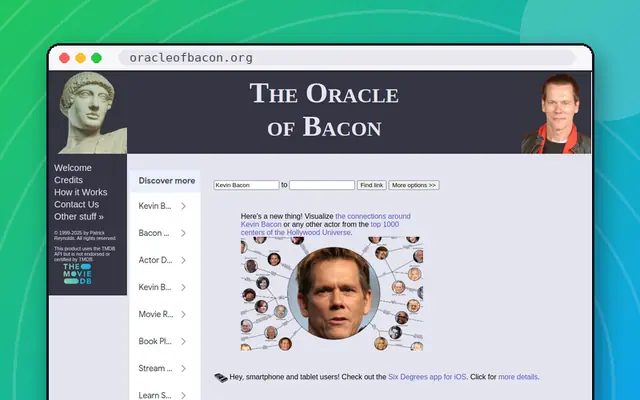
Know Your Meme is the standard reference, with entries that trace where a meme began and how it spread. For older internet milestones, try Internet Artifacts, a museum-style timeline of early internet moments. Both are in this directory and linked from their profile pages.
Many are. Nyan Cat, Homestar Runner and the Million Dollar Homepage all still load. Others have vanished or been taken over by parked domains, which is why we check links daily and keep a rest-in-peace record of sites that have gone dark.