The Deep Sea
Scroll down through the ocean and meet what lives at every depth.
- 5 minutes
- Works on phones
- Alive
65 sites · every link checked daily
The best educational websites do not announce that they are teaching you. They hand you a slider, a game or a scrolling story, and you realize ten minutes later that you now understand game theory, or how a neural network learns, or why the Mercator map lies about Greenland.
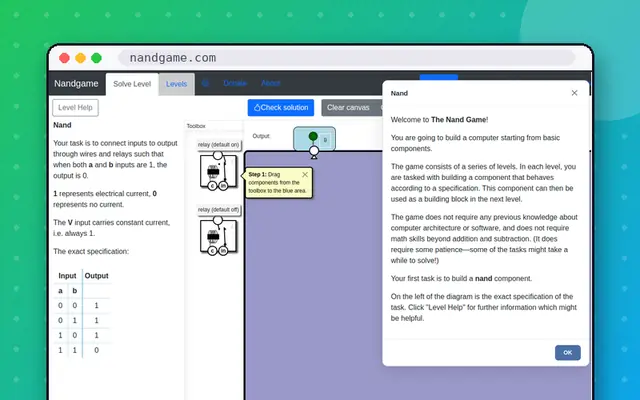
That is the idea behind this category. These are educational websites for people who would rather poke at a model than read about it. The Evolution of Trust teaches how cooperation emerges through a series of simple games. NandGame walks you from a single logic gate toward a working computer. Ptable is a periodic table so well designed it makes a reference tool feel like a toy. And PhET Interactive Simulations, from the University of Colorado Boulder, lets you fiddle with circuits, waves and gravity until the physics clicks.
What we look for: a clear idea, a reason to interact, and a creator who clearly cares. What we avoid: course platforms, paywalled lessons and anything that wants your email before showing you the good part.
Many of these sit in the corner where education meets rabbit hole, so budget extra time. If you want a tidier route, our weird educational sites list is a curated starting point, and Websites Like Neal.fun covers the lighter end. Learners who like to code will also enjoy the games in Games, and anyone who likes numbers should wander into Data & Visualization. Prefer to be surprised? Take me somewhere odd.
Scroll down through the ocean and meet what lives at every depth.
A website that contains every possible page of text.
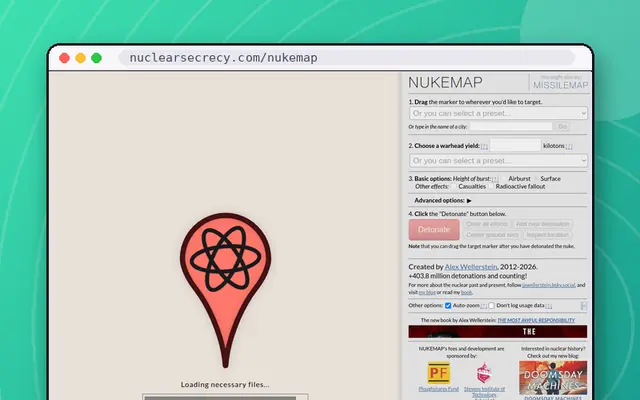
Drop a nuclear weapon on a map and see the effects.
An interactive story about living with anxiety.
A playable explainer on why we trust each other, with game theory.
Absurd hypothetical questions, answered with real science.
An idler's miscellany of odd facts, puzzles and curiosities.
Free physics, chemistry and math simulations you can poke at.
A guided tour of the tricks websites use to manipulate you.
A comic-style interactive guide to spaced repetition.
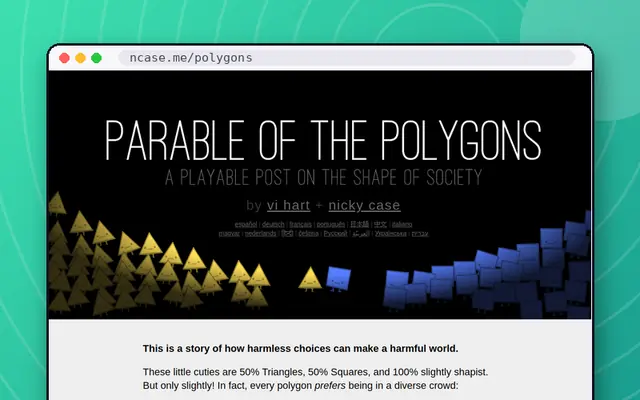
A playable post on how small biases build segregated societies.
Long, gorgeous interactive essays on how things work.
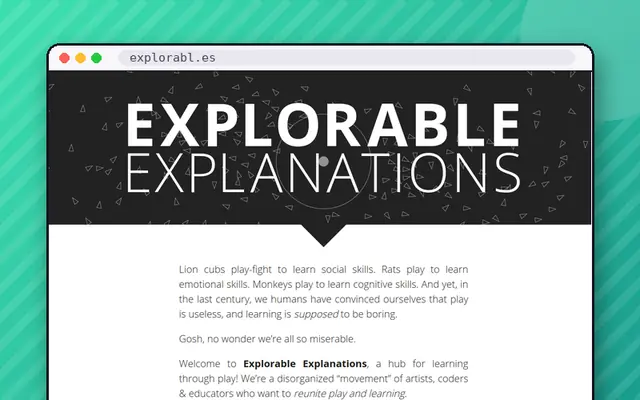
A hub for interactive essays that you learn by playing.
A playable guide to how ideas and behaviour spread through crowds.
Long-form true stories that are obscure, odd and gripping.
Interactive explanations of ideas like Markov chains and eigenvectors.
Michael Bach's classic collection of optical illusions.
An interactive guide to voting systems and why they matter.
Type some numbers and find the sequence they belong to.
A tour of odd news, inventions and strange history.
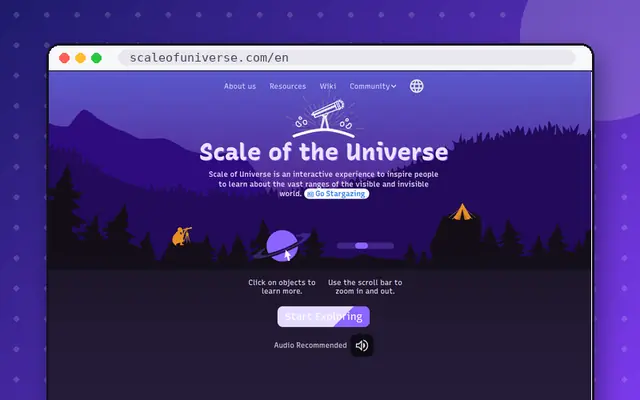
Zoom from quarks to the edge of the observable universe.
Drag countries around the map to see their real size.
Dig a hole and see where you would come out the other side.
Animated bubble charts that bust myths about the world.
Wikipedia's own list of its strangest entries.
Train a neural network in your browser and watch it learn.
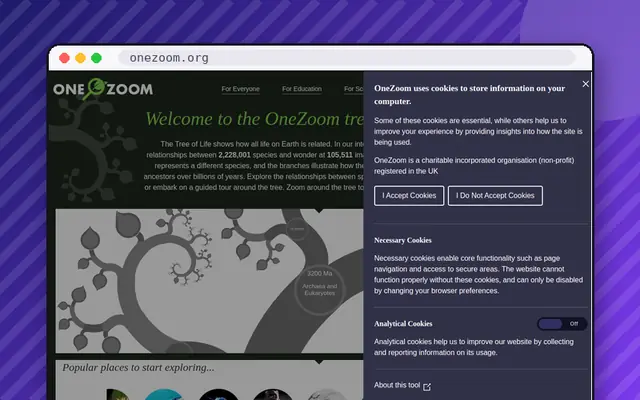
Zoom through the entire tree of life, from bacteria to blue whales.
Help frogs reach their lily pads using CSS.
Neal Agarwal's playground of games, visualizations and weird stuff.
The periodic table, made interactive and genuinely nice to use.
Invented words for feelings you didn't know had names.
Judge self-driving car dilemmas and compare with the world.
Fly through the solar system, Earth and spacecraft in 3D.
Charts on how the world is changing, with the data behind them.
Design an asteroid and fire it at any spot on Earth.
True random numbers from atmospheric noise.
Crosswords where the clues are regular expressions.
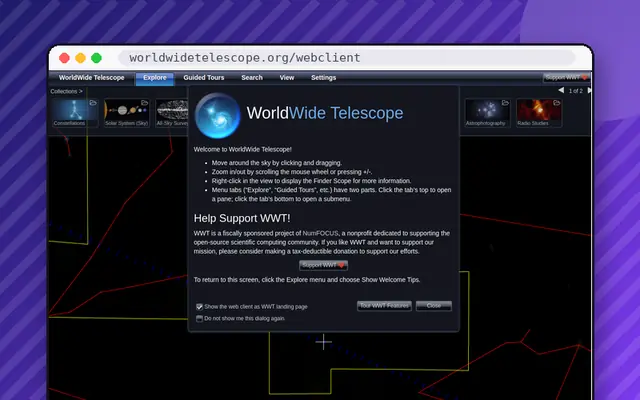
A free planetarium that runs in your browser.
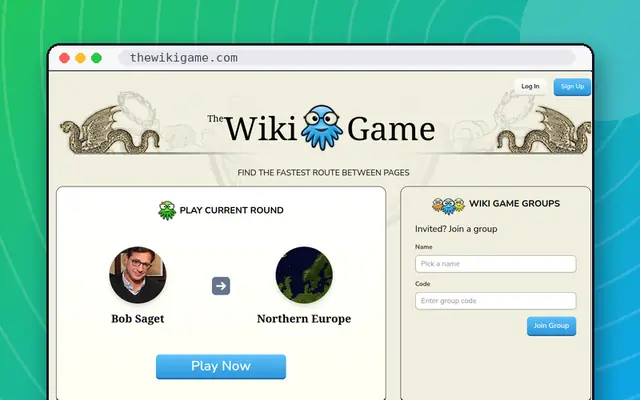
Race from one Wikipedia page to another using only links.
Learn how music works by making it in your browser.
A hands-on guide to synthesizers that actually sounds good.
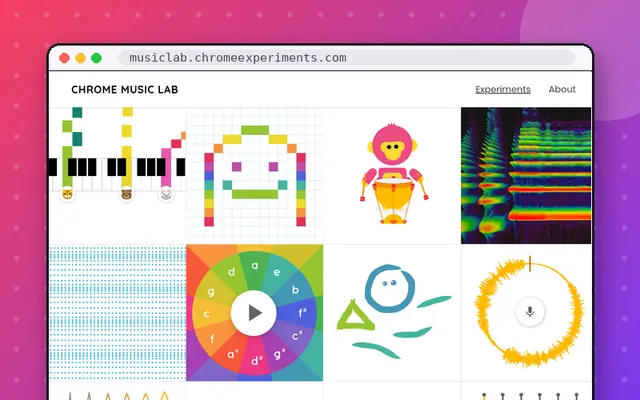
Playful experiments that make music easy to explore.
A catalogue of deliberately bizarre programming languages.
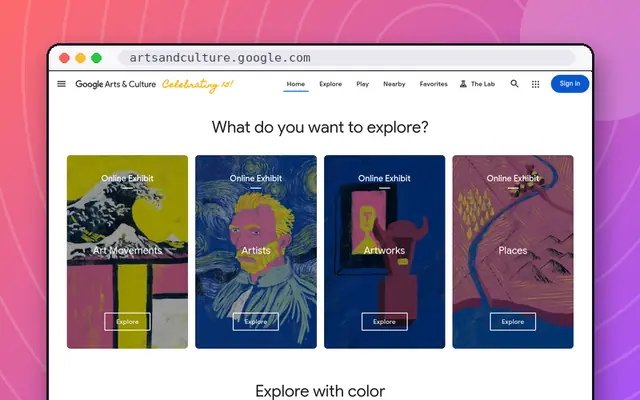
Museums, art and cultural treasures you can zoom into.
Strange and wonderful out-of-copyright art, books and ephemera.
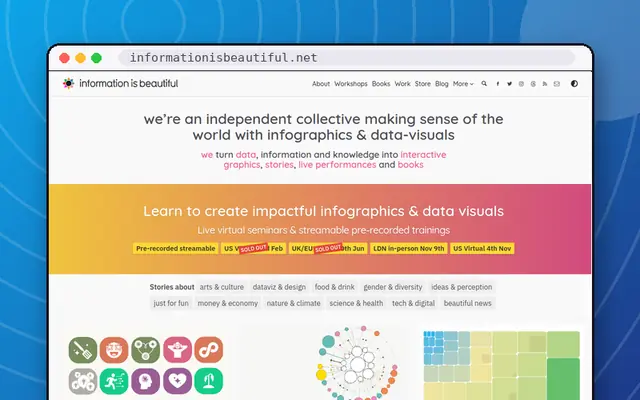
Visual essays that explain culture with data.
Learn Vim keystrokes by playing an adventure game.
Real-time counters for population, births, deaths and more.
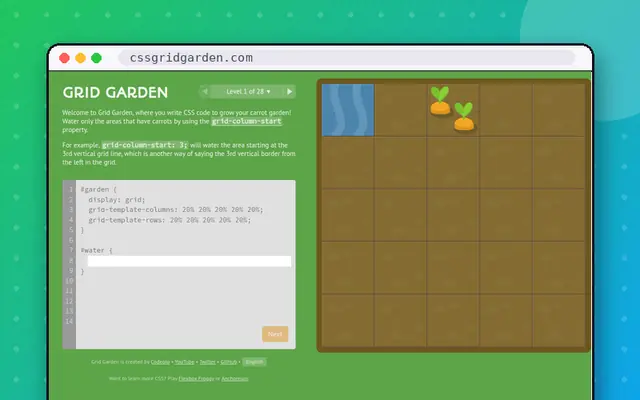
Water your carrots with CSS grid code.
David McCandless's gorgeous data visualisations.
A years-long, alphabetical blog judging the world's sandwiches.
Ride a virtual elevator through the atmosphere and into space.
The original Flash-era zoom through everything, rebuilt for HTML5.
Type a year and see which historical figures overlapped.
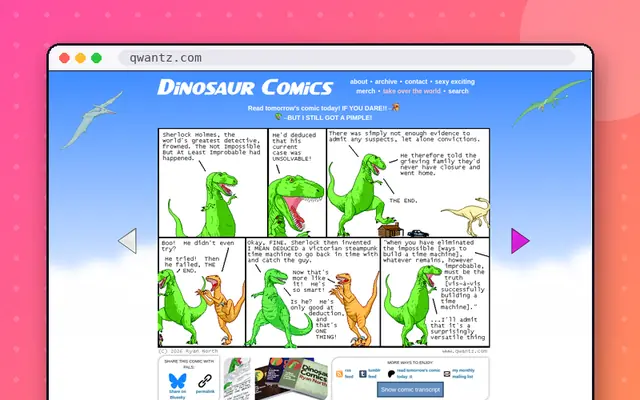
Randall Munroe's webcomic of romance, sarcasm, math and language.
A new space photo every day, with an expert's explanation.
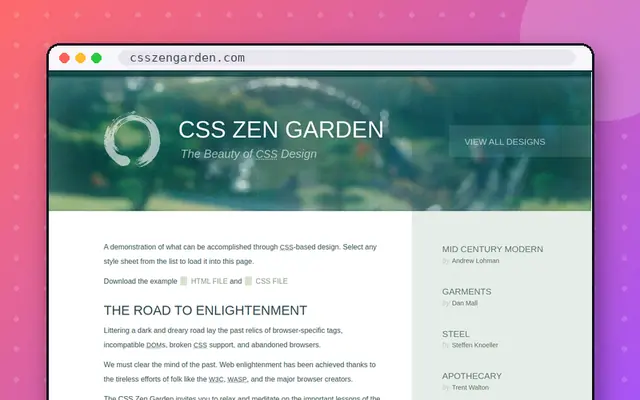
One HTML page, hundreds of wildly different designs.
Train an AI to recognise your face, sounds or poses.
Explore the universe through a virtual telescope in your browser.
Look for sites that let you interact rather than read. The Evolution of Trust, NandGame, PhET simulations, Explained Visually and OneZoom all teach real ideas through play. They suit adults and teenagers who want to understand something quickly without sitting through a lecture or signing up for a course.
The sites we list are free to use for their main experience, though a few are run by nonprofits or universities and some accept donations. We avoid sites that put the content behind a signup or payment. If a site adds ads or optional paid features, the profile page says so.
Many work well in a classroom, especially PhET simulations, Flexbox Froggy and Explorable Explanations. We do not review them against any curriculum, so check each one yourself first. Some entries, like NUKEMAP, deal with sobering subject matter and suit older students.
An explorable explanation is an article you can play with. Instead of reading a description of how something works, you change the inputs and watch the outcome. Nicky Case's work is the best-known example, and the Explorable Explanations hub is a good place to find more.