The Deep Sea
Scroll down through the ocean and meet what lives at every depth.
- 5 minutes
- Works on phones
- Alive
28 sites · every link checked daily
You do not need a telescope to explore the universe, just a browser. The interactive space websites in this category put planets, stars, storms and sunspots a click away, along with a handful of lab-bench toys for the science itself.
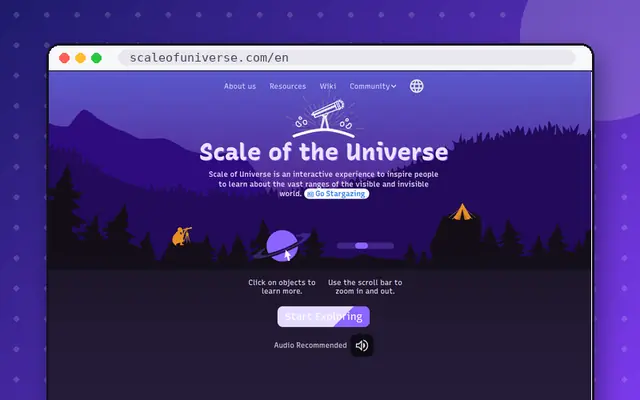
For your own sky, Stellarium Web is a free planetarium that shows the stars from any place and date. NASA's Eyes lets you fly through the solar system and follow spacecraft in 3D. Where the ISS at? shows the station's position in real time, which circles the planet roughly every 90 minutes. To feel small, try The Scale of the Universe, which zooms from the tiniest particles to the whole universe, or Space Elevator, which scrolls you up through the atmosphere and into space.
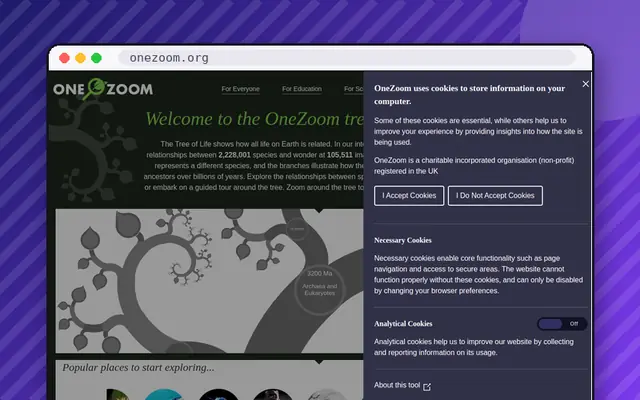
Science here is not only about the sky. OneZoom lets you zoom through the tree of life, Ptable is a periodic table that is a pleasure to use, and PhET offers free simulations for physics, chemistry and math.
Many entries are calm and re-openable, such as Astronomy Picture of the Day, which publishes a new image with an expert caption daily. Others, like Asteroid Launcher, are more morbidly fun.
Continue with the weird educational list, or browse Webcams & Live for real streams from space and nature. When in doubt, the button will pick a planet.
Scroll down through the ocean and meet what lives at every depth.
Zoom from quarks to the edge of the observable universe.
A 3D tour of the nearby stars, with background music.
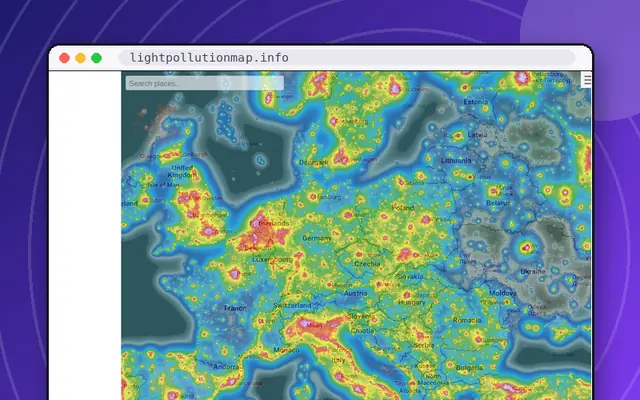
See how bright the night sky is where you live.
Zoom through the entire tree of life, from bacteria to blue whales.
Fly through the solar system, Earth and spacecraft in 3D.
The periodic table, made interactive and genuinely nice to use.
See exactly where the International Space Station is right now.
Design an asteroid and fire it at any spot on Earth.
A free planetarium that runs in your browser.
Near-live images of the Sun in different wavelengths.
Ride a virtual elevator through the atmosphere and into space.
The original Flash-era zoom through everything, rebuilt for HTML5.
A new space photo every day, with an expert's explanation.
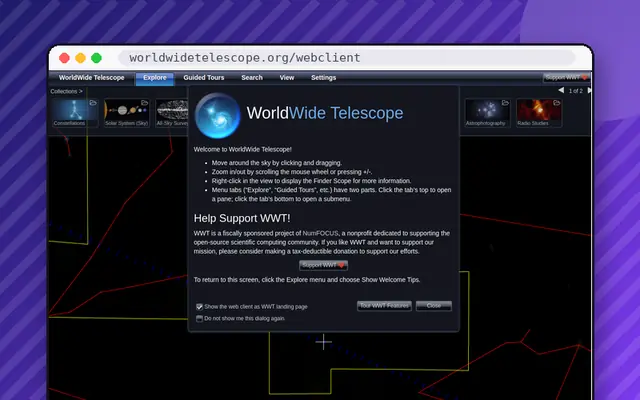
Explore the universe through a virtual telescope in your browser.
Live counters for days since the last earthquake, eruption and more.
Absurd hypothetical questions, answered with real science.
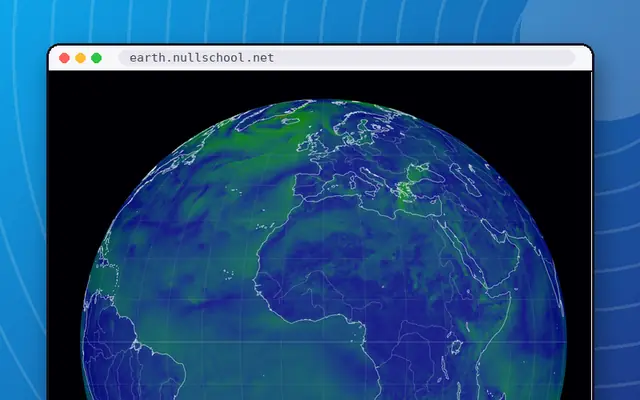
A gorgeous live globe of the world's winds, weather and ocean currents.
Watch lightning strike around the world in near real time.
Free physics, chemistry and math simulations you can poke at.
Live nature cams, from Alaskan bears to underwater reefs.
Animated wind, wave and storm maps with a huge layer menu.
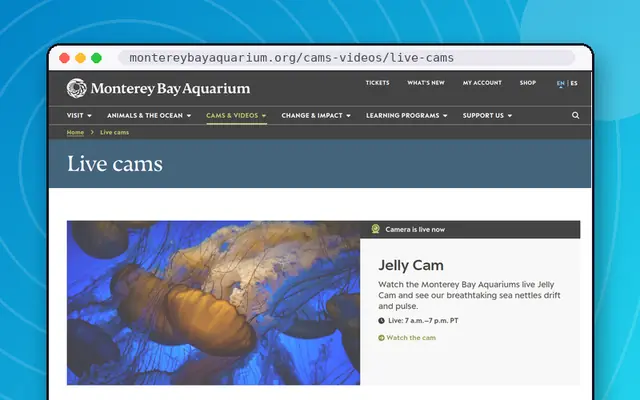
Watch jellies, sharks and sea otters on live cams.
A live map of every notable earthquake on Earth.
Live NASA streams: launches, spacewalks and views from the ISS.
Live feeder and nest cams from the Cornell Lab of Ornithology.
Stellarium Web, NASA's Eyes, Solar System Scope, The Scale of the Universe and WorldWide Telescope cover the sky from every angle. Where the ISS at? and the Solar Dynamics Observatory provide near-live views. All are free to use in a browser, and we check their links daily.
You can see its position live. Where the ISS at? plots the station's current location, altitude and speed on a map. If you want actual video, NASA Live streams launches, spacewalks and ISS views when events are scheduled, so check the schedule first.
Yes. Stellarium Web is a free planetarium that shows the sky from your location or anywhere else, with constellations, planets and deep-sky objects. You can change the date to see how the sky moves, and it works without installing anything.
Scroll-based pages like Space Elevator and The Scale of the Universe work on touch screens, as do Stellarium Web and Astronomy Picture of the Day. 100,000 Stars is best on desktop. Each profile includes a mobile badge so you can check before you tap.